
Inspecting Brood Frames, Pests & Disease Management


Every beekeeper deals with pests and diseases. The question isn't whether you'll encounter them—it's how you'll respond when you do.
This guide follows the principles of Integrated Pest Management (IPM): start with the least invasive approach and escalate only when necessary. The Primal Bee hive's sealed design and thermal efficiency give you a head start, but they don't eliminate the need for vigilance.
The IPM Philosophy
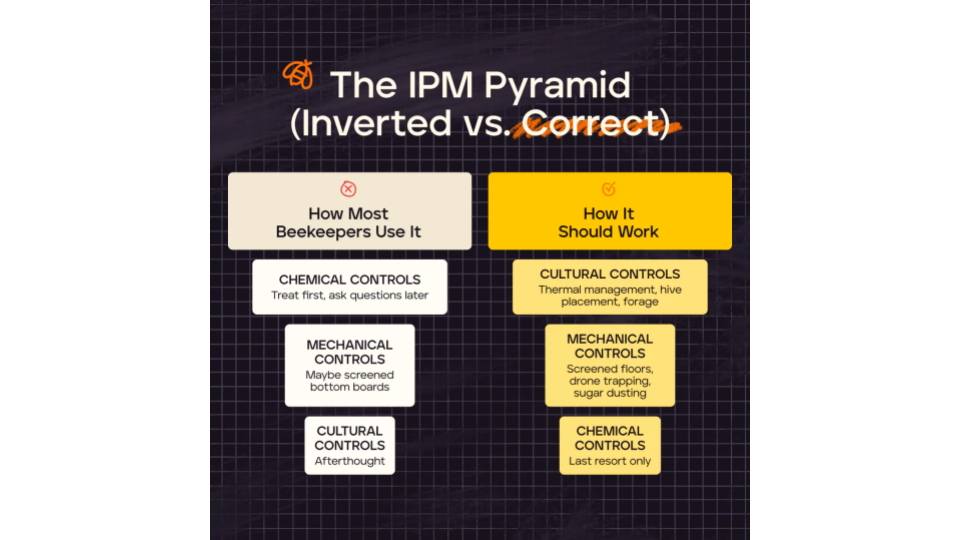
Integrated Pest Management uses a hierarchy of control methods:
- Cultural controls — Management practices that prevent problems (hive design, apiary hygiene, colony strength)
- Mechanical controls — Physical interventions (traps, barriers, removal)
- Biological controls — Natural predators or organisms that target pests
- Chemical controls — Treatments applied as a last resort
The goal is to do the least amount of harm while effectively controlling the problem. This means monitoring first, then deciding whether intervention is needed—and if so, starting at the bottom of the pyramid.
The treatment treadmill problem: Many beekeepers fall into a pattern of routine chemical treatments without checking whether they're actually needed. One study found that beekeepers using oxalic acid strips had no significant difference in mite loads compared to beekeepers who weren't treating at all. The lesson: monitor before you treat, and don't assume more treatment is always better.
Resistance concerns: If you use the same chemical treatment repeatedly, pests develop resistance. Rotate treatments, and use the minimum effective dose. A treatment that kills 99 of 100 mites leaves the resistant one to reproduce—and over time, that's the only kind you'll have left.
Monitoring: The Foundation of Good Pest Management
Before treating for anything, you need to know what you're dealing with and how severe it is.
Varroa Monitoring
Varroa tray method:
- Clean the tray and spray it lightly with cooking oil (helps mites stick)
- Leave in place for 3-7 days
- Count the natural mite drop
Interpreting results (from the Primal Bee hobbyist manual):
- 4 mites or fewer over 3 weeks = acceptable condition
- 5-12 mites = concerning; consider starting treatment
- 13+ mites = likely treatment failure; treat immediately
Visual inspection:
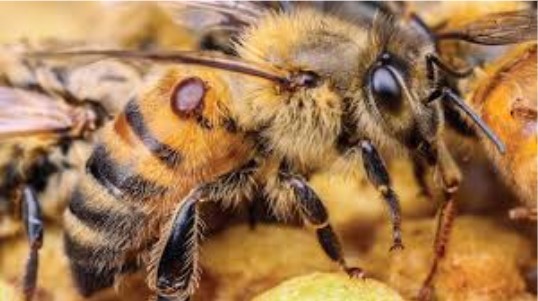
- Look for mites on bees (small reddish-brown spots on bee bodies)
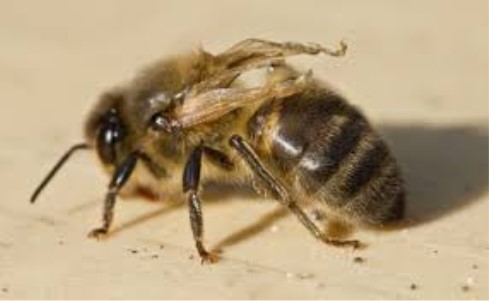
- Look for bees with twisted/deformed wings (sign of deformed wing virus, transmitted by varroa)
- Check drone brood by uncapping and pulling out pupae—mites prefer drone brood because it takes longer to develop
What to Look For
Frame Layout Pattern
Unlike traditional hives where brood may be scattered across multiple boxes, Primal Bee's continuous vertical design concentrates brood in the nest area. Look for:
- Elliptical brood patterns extending across frames
- Dense brood coverage due to optimal temperature control
- Consistent development stages from bottom to top of frames
Health Indicators
Green flags (healthy colony):
- Lots of bees
- Solid brood pattern (consistent, graduated pattern with old larvae, new larvae, then eggs - or uncapped to capped brood)
- Look for the queen if you can (though if you can't find the queen, a solid graduated brood pattern indicates a healthy queen)
Red flags (potential problems):
- Signs of disease or pests
- Spotty brood pattern
- Lots of drones (male bees) - if the queen dies and worker bees start laying drones
- Queen cells (can indicate workers are making a new queen due to weak or dead queen)
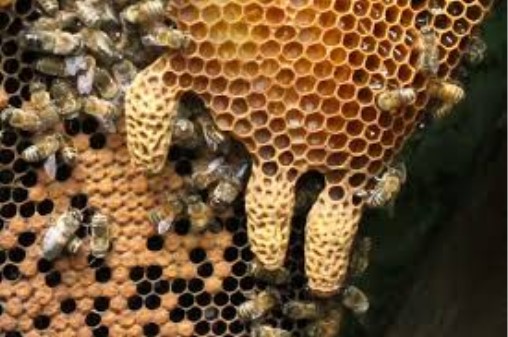
What Healthy Brood Looks Like
With capped brood: Silken capped coverings should have holes in them - bees nibble holes to check on larvae. Cleaner bees are checking on the colony because there might be distress, or they're cleaning cells out.
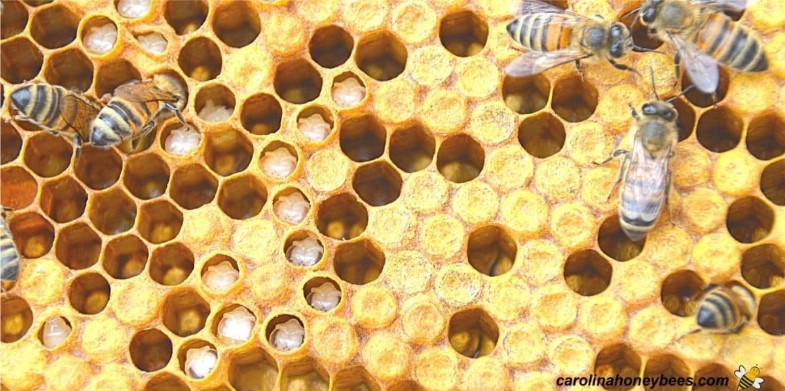
Chalky or slimy brood: These might indicate a brood pathogen.
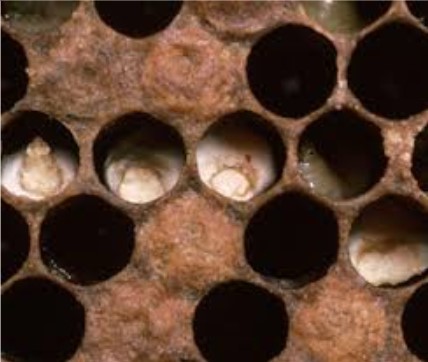
Twisted wings on bees: Sign of varroa (pathogen called deformed wing virus).
Varroa Mites
Varroa destructor is the most significant pest facing honeybees worldwide. Every colony has mites; the question is whether the population is under control.
Why Varroa Matters
Varroa mites:
- Feed on bee fat bodies, weakening individual bees
- Transmit viruses (especially deformed wing virus)
- Shorten bee lifespan
- Weaken colonies to the point of collapse if left unchecked
Cultural Control
Start with a strong, well-sealed hive. The Primal Bee design is already a form of cultural control—the stable thermal environment supports bee health, and strong colonies can better manage mite loads.
Powdered sugar dusting: When installing a new package of bees, dust them with powdered sugar before putting them in the hive. The sugar makes mites lose their grip and fall off. It's harmless to bees (they just eat it) and gives your colony a cleaner start.
Mechanical Control
Drone brood removal: Mites reproduce in capped brood, and they prefer drone brood because drones take longer to develop (giving mites more reproduction time). You can exploit this:
- Allow bees to build drone comb (or use drone foundation)
- Once drone brood is capped, cut it out
- Freeze the comb to kill mites and larvae
- Feed frozen comb back to bees (they'll eat the larvae and reuse the wax)
This removes a significant number of mites without any chemicals.
Screened bottom boards: Allow mites that fall off bees to drop out of the hive rather than climbing back on.
Chemical Treatment in Primal Bee Hives
Important: Primal Bee hives require different dosing than standard hives.
Standard treatment recommendations assume vapor will leak out through gaps in wooden equipment. Primal Bee's sealed design means vapor stays inside longer and distributes more effectively.
Dosing guidance:
- Standard hives typically use 2g of oxalic acid vapor per deep box
- A Primal Bee nest (equivalent to ~3 deeps) would seem to need 6g
- Start with 1g and increase incrementally only if needed
- Monitor results before increasing dose
Application method:
- In standard hives, you enter through the bottom and let vapor rise
- In Primal Bee hives, enter through the feeder hole and direct vapor downward
- This creates more balanced distribution because bee wing activity pushes vapor through the entire hive
Safety note: EPS is flammable and can melt with prolonged heat exposure. Keep vaporizer heating elements away from direct contact with hive surfaces.
Common treatments:
- Oxalic acid (vapor or dribble) — Currently popular, but recent research questions effectiveness of strip formulations
- Formic acid — Effective but can be hard on bees in hot weather
- Thymol (oregano-based compounds like Apiguard) — Gentler but requires specific temperature ranges
- Apivar strips — Contact treatment; not recommended for Primal Bee due to sealed design
Fumigation protocol (from hobbyist manual):
- Two main treatment cycles: end of summer and mid-winter (when queen stops laying)
- Each cycle consists of 4-8 fumigations at small doses
- Apply at 5-7 day intervals
- Check varroa tray 2-3 days after each fumigation
- Look for peak mite fall (usually around fumigation 5-6)
- After mite fall decreases noticeably, apply 2-3 more fumigations to complete the cycle
Why this works: More fumigations at lower doses is more effective and safer than fewer fumigations at higher doses. Lower chemical quantities reduce queen fertility problems and mite resistance development.
Small Hive Beetles
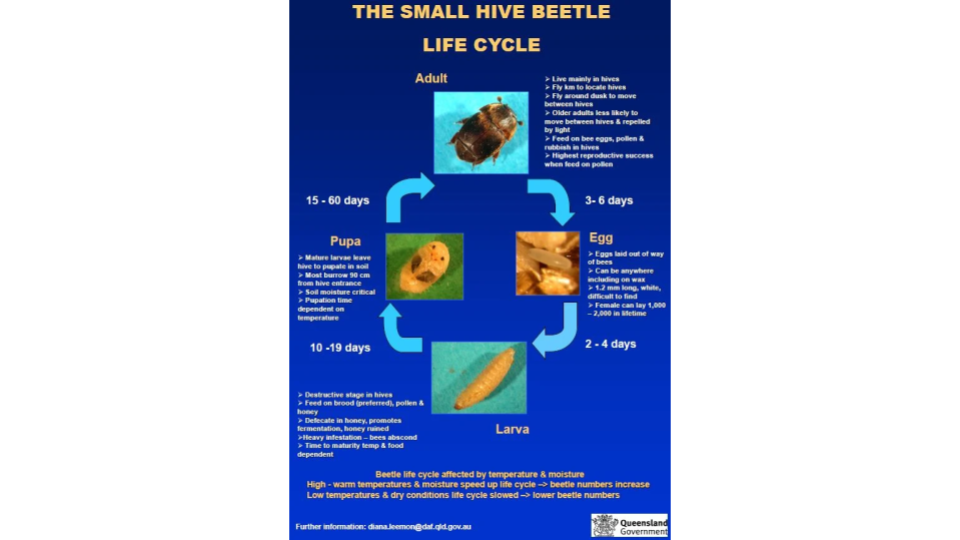
Small hive beetles typically only damage weak colonies. A strong colony in a well-sealed hive can usually manage them. The problem comes when beetle populations build up faster than bees can control them.
Signs of Small Hive Beetle Infestation
- Beetles visible running across comb (they're fast and hide from light)
- Slimy, fermenting honey with a yeast/bakery smell
- Larvae (small white grubs) in comb
- If severe: bees may abscond (abandon the hive entirely)
Cultural Control
- Maintain strong colonies — Beetles thrive in weak hives
- Keep apiary clean — Beetles are attracted to fallen fruit; clean up any fruit trees nearby
- Don't leave old equipment lying around — Empty hives with old comb are beetle breeding grounds
Mechanical Control
Ground covers and barriers: Beetle larvae fall out of the hive and burrow into soil to pupate. Making them travel farther reduces survival:
- Tarp or ground cover under hives
- Diatomaceous earth around hive stands (scratches larvae exoskeletons, causing dehydration)
- Screened bottom boards
In-hive traps:
- Beetle Blaster/Beetle Jail — Traps placed between frames with mineral oil and apple cider vinegar (beetles are attracted to vinegar, drown in oil)
- Swiffer pads — Place under the lid; beetle legs get tangled in the fibers
- Clean traps regularly—dead beetle buildup provides an escape route for live ones
Protein patty warning: Protein supplements can attract beetles. If you see beetles congregating on patties, stop using them or use Swiffer pads as a barrier.
Biological Control
Beneficial nematodes can be applied to soil around hives. They attack beetle larvae during pupation.
Chemical Control
Available if needed, but rarely necessary if mechanical controls are in place.
Severe Infestation: Starting Fresh
If beetles have slimed out a hive:
- Remove bees and queen to clean equipment
- Freeze all components for 48+ hours
- Clean thoroughly
- Use bleach-water solution to kill remaining eggs
- Let dry completely before reuse
Wax Moths
Wax moths target weak colonies and unprotected equipment. They don't usually attack strong, well-defended hives.
Signs of Wax Moth Infestation
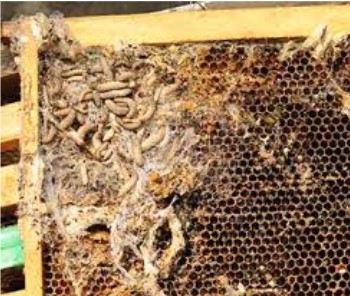
- Silky webbing (looks like spider webs or silk threads)
- Boat-shaped tunnels bored into comb or hive walls
- Cocoons in corners and crevices
- Larvae (caterpillars) visible in comb
Cultural Control
- Maintain strong colonies — Bees will remove moth larvae and eggs
- Don't store equipment with old comb exposed — Moths will find it
- Clean equipment promptly after extracting or removing from hives
Mechanical Control
Freezing: Freeze frames and equipment for 48+ hours to kill all life stages (eggs, larvae, pupae, adults).
Storage protection:
- Double-bag equipment in thick-ply landscaping bags while waiting to treat
- This prevents moths from chewing in (they can chew through thin plastic) and traps any moths already present
Repair damage: Wax moths can bore into EPS just as they bore into wood. Fill tunnels and holes with water-based wood putty (Gorilla Glue makes one that works well).
Chemical Control
Rarely needed if freezing and proper storage are practiced.
Ants
Ants are attracted to the sugar and protein in hives. The Primal Bee's sealed design helps, but ants are persistent.
Cultural Control
- Start with a well-sealed hive (Primal Bee advantage)
- Don't spill sugar syrup or honey outside the hive—this creates ant trails
- Raise hives on stands — Makes access harder
Mechanical Control
Moats: Set hive stand legs in containers filled with:
- Soapy water
- Oil
- Diatomaceous earth
Ants can't cross these barriers to reach the hive.
Caution with diatomaceous earth: Don't use inside the hive or at the entrance—it will also damage bee exoskeletons.
Tanglefoot/Catchmaster: These are sticky barriers made from plant resins and carnauba wax, used in orchards to keep ants off fruit trees. Apply around hive stand legs. Reapply monthly as dust and weather reduce stickiness.
Note: Bees can also get stuck in Tanglefoot if they walk on it, so apply only to stand legs, not hive surfaces.
Chemical Control
Ant baits (like Amdro) can be placed around—not in—the hive as a last resort. Avoid ant sprays near hives; ants and bees are closely related, so anything that kills ants may harm bees too.
Rotate products: If you use ant bait, switch brands periodically to prevent resistance.
Rodents (Mice)
Mice seek warm shelter in winter and will move into hives if they can get in. They nest in the hive, destroying comb and disturbing the cluster.
Cultural Control
- Keep a tidy apiary — Remove debris and hiding spots
- Reduce entrances before winter — Smaller openings are easier to defend
Mechanical Control
Mouse guards: Install metal mesh (like chicken wire or hardware cloth) over the entrance that allows bees through but blocks mice. Install by early fall before mice start seeking shelter.
Note: Primal Bee is developing a dedicated mouse guard product. For now, DIY with chicken wire or metal screen works fine.
Yellowjackets
Yellowjackets become aggressive in late fall as their natural food sources decline. They'll scavenge dead bees first, then progress to entering hives and stealing larvae/pupae.
Signs of Yellowjacket Pressure
- Yellowjackets hovering near entrance
- Dead bees being carried away
- Bees defensive at entrance
Natural Bee Defense
Strong colonies can "ball" yellowjackets—surrounding them and generating heat to kill them. Weak colonies can't do this effectively.
Mechanical Control
Entrance reducers: Smaller openings are easier to defend.
Yellowjacket traps: Can be effective but use with caution—traps may attract yellowjackets from neighboring areas onto your property. Place away from hives, not directly next to them.
Diseases
American Foulbrood (AFB)
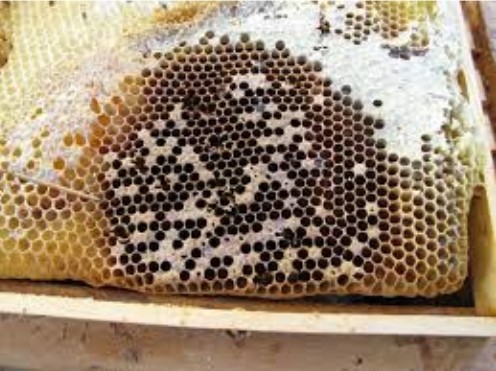
This is serious. American foulbrood is a reportable disease in most areas. If you suspect AFB, contact your state apiarist or local beekeeping association immediately.
Signs:
- Sunken, greasy-looking cappings with irregular holes
- Foul smell (like rotting meat)
- "Ropy" test: Insert a stick into a cell and pull out slowly—infected material strings out like ropy glue
- Dead larvae turn coffee-brown, then black scale that adheres to cell walls
What to do: AFB spores are extremely persistent and can remain viable for decades. In most cases, infected equipment must be destroyed (burned). Do not attempt to treat or salvage equipment without guidance from your state apiarist.
European Foulbrood (EFB)
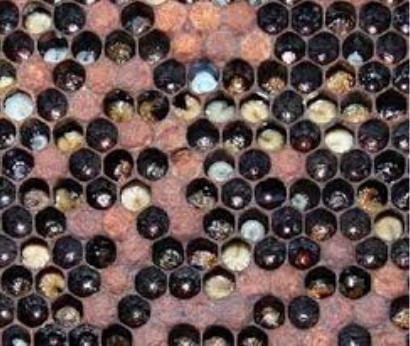
Less severe than AFB but still concerning.
Signs:
- Larvae die before capping (unlike AFB, where they die after)
- Twisted, discolored larvae (yellowish to brown)
- Sour smell (not as foul as AFB)
- Spotty brood pattern
Treatment: Colonies can sometimes recover with requeening and antibiotic treatment. Consult your state apiarist.
Chalkbrood
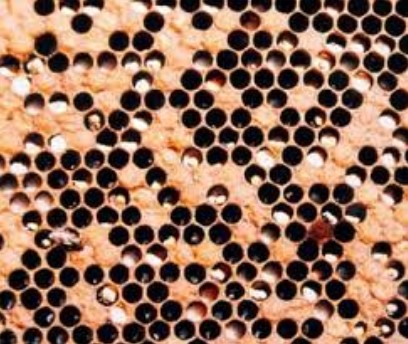
A fungal disease that affects larvae.
Signs:
- "Mummified" larvae that look chalky white or gray
- Hard, chalk-like bodies in cells or at hive entrance
- Usually appears during cool, damp conditions
Treatment: Usually resolves on its own as weather warms. Ensure good ventilation and consider requeening if persistent.
Nosema
A microsporidian gut parasite that affects adult bees.
Signs:
- Dysentery (feces streaked on hive exterior)
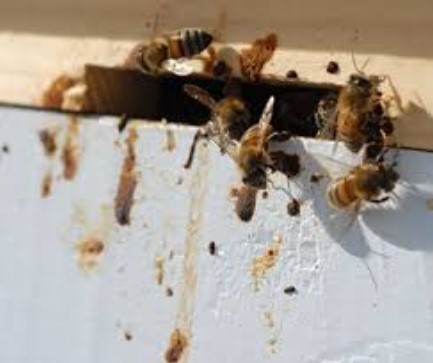
- Reduced lifespan and poor performance
- Crawling bees unable to fly
- Can look like a weak colony with no obvious cause
Note: Nosema can cause the queen to stop laying, leading beekeepers to think they need to requeen when the actual problem is the disease. High resource burn rate from reduced bee lifespan puts additional pressure on the colony.
Treatment: Fumagillin was the traditional treatment but is increasingly restricted. Best prevention is maintaining strong colonies and good hive conditions.
What's Different in Primal Bee Hives
The Primal Bee design provides several built-in advantages for pest and disease management:
Sealed Construction
The tight fit and beveled edges reduce entry points for pests. Ants, beetles, and moths have fewer ways in compared to wooden hives with natural gaps.
Thermal Stability
- Stronger colonies — Better temperature regulation means less energy spent on heating/cooling and more on colony health
- Better brood survival — Consistent temperatures support healthy development
- Reduced stress — Stressed colonies are more susceptible to pests and diseases
Vapor Treatment Efficiency
Chemical treatments stay inside the hive longer and distribute more evenly. This means you need less product to achieve the same effect—better for bees and more economical.
Moisture Management
EPS doesn't absorb moisture like wood, reducing conditions that favor certain pathogens.
Record Keeping
Track your pest management activities:
- Mite counts — Date, method, count, action taken
- Treatments applied — Product, dose, date, observed results
- Health observations — Any disease signs, brood pattern quality, unusual behavior
Over time, these records help you:
- Identify patterns (seasonal mite spikes, recurring issues)
- Evaluate treatment effectiveness
- Make better decisions about when and whether to treat
When to Get Help
Contact experienced beekeepers, your local extension office, or state apiarist if you see:
- Signs of American foulbrood (mandatory reporting in most states)
- Persistent problems despite treatment
- Anything you can't identify
- Rapid colony decline with unclear cause
It's always better to ask than to guess with bee health.
Have pest or disease questions? Primal Bee holds regular office hours where you can get specific guidance for your situation. Bring photos if you can—visual identification helps enormously.


