
The Primal Bee story

Built by beekeepers who refused to keep losing bees
Two lifelong friends spent over a decade redesigning a 170-year-old box into a patented thermodynamic hive — so your colonies grow faster, make more honey, and survive the winter.

Free US Shipping On Orders $89+
Backed by Field Trials
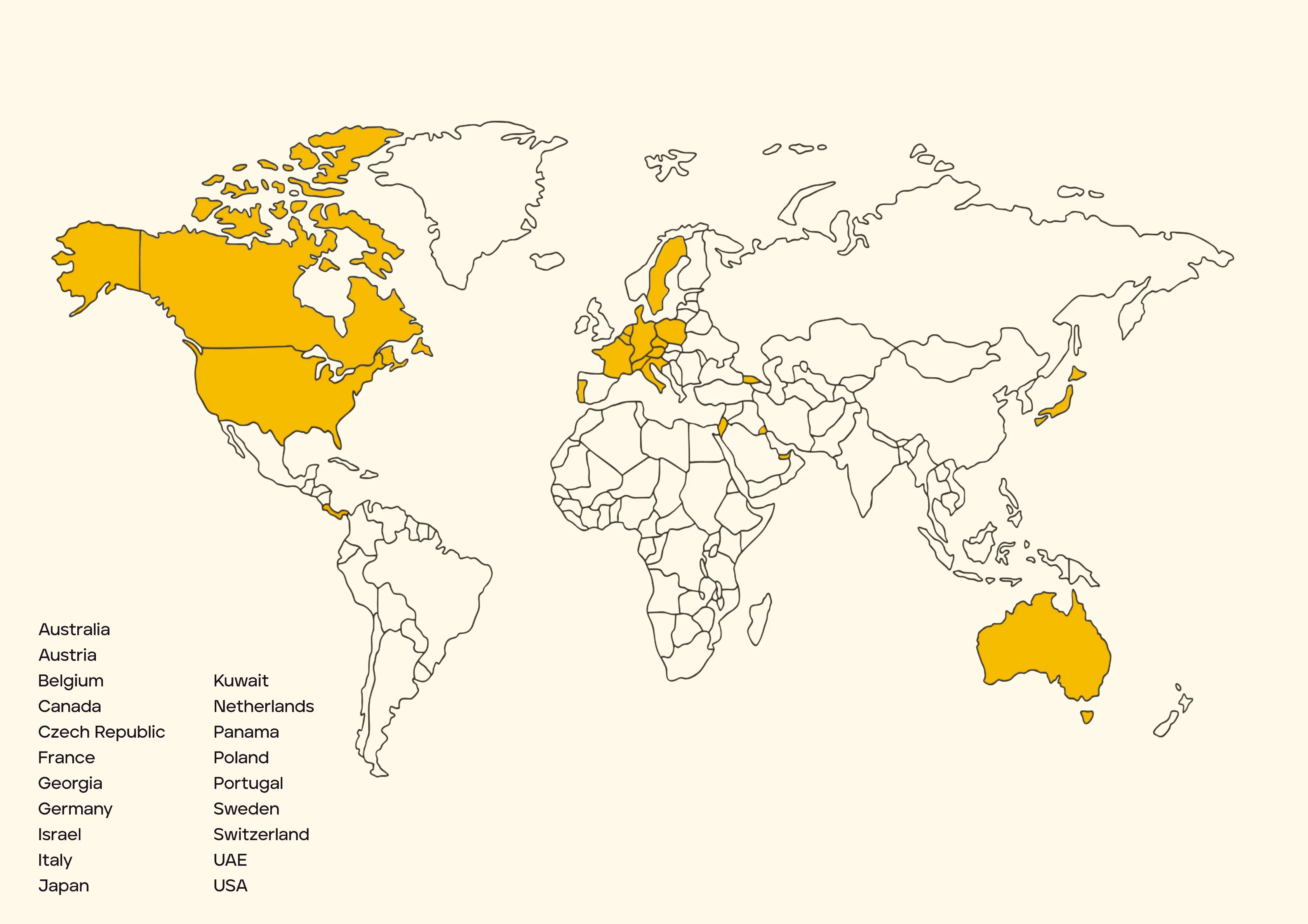
Patented in the US, EU, Australia & Canada
It started with two friends who kept losing their bees
Alessandro Gamberoni and Gianmario Riganti met in high school and never stopped adventuring together, climbing, skiing, and trading notes on whatever they were building. When they took up beekeeping as a way to spend more time outdoors, they ran into the same wall every beekeeper knows too well: for three years straight, they lost their colonies.
A hidden world inside a cedar tree
A fellow beekeeper invited them to observe a large established colony inside a hollow cedar. The observation prompted a question about how enclosure geometry and thermal conditions affect a colony. Primal Bee's eventual answer was engineered and measured, not an attempt to imitate the cavity.
Bees are thermally sensitive — the box was fighting them
Over more than a decade of development, Alessandro and Gianmario investigated how hive heat transfer, brood geometry, spacing, sealing, and entrance placement affect the environment a colony must regulate. Traditional equipment solved many practical needs; Primal Bee adds thermodynamic performance as another design variable.
A hive engineered around colony biology
Their patented answer combines high-density EPS walls, one connected vertical brood nest, and sealed joints with controlled airflow to hold a more stable thermal environment. Field-tested from Alaska to the Negev desert, the colonies finally did what they're built to do: grow, store, and overwinter.
Today that work ships as the Primal Bee Hive: a complete thermodynamic system patented in the US, EU, Australia, and Canada. Controlled tests and attributed field reports document specific outcomes under specific conditions; forage, weather, genetics, queen quality, mites, timing, health, and management still shape every colony. Read the full story.
Why we rebuilt the hive
Gianmario Riganti and Alessandro Gamberoni share the losses, questions, and decade of field work behind Primal Bee.
What the redesign actually delivers
These figures come from controlled comparisons, field trials, or development records. They are not universal forecasts; conditions and beekeeper management remain material.
Honey production vs. a standard hive
Colony size through faster brood growth
Less maintenance and hive intervention
Primal Bee versus standard hive stores consumed in one controlled comparison (6 kg vs 30 kg)
Of thermodynamic R&D behind the design
Test locations across Europe and the U.S.
Field tested by beekeepers around the world
What experienced beekeepers observed in their own apiaries
Read Primal Bee hive reviews, attributed field reports, and the context needed to judge what each result means.
The Primal Bee hive is one of the most natural designs I’ve seen
The Primal Bee hive is one of the most natural designs I’ve seen—closely reflecting what bees prefer in the wild. In my work studying condensing colonies, I’ve looked at how to balance heat, humidity, and airflow in ways that support, rather than stress, the bees. This system handles those factors with impressive efficiency, and it comes closer than most hive designs to what bees might create for themselves.

Will Hesbach
President, Connecticut Beekeepers Association & Board of Directors, Eastern Apicultural Society
Nearly 100 pounds in the first season
Just ordered 6 more. I too didn't believe the claims when I bought two hives. Had to start with no comb and a package because of the frame design. I live in a northern climate with a short season. I installed the package in May. By the end of that first season, they had built out everything with tons of stores, and I had harvested almost 100 pounds from the supers.

Brett Reynolds
Experienced Hobbyist, Utah
She observed faster spring buildup
A significantly enhanced colony development dynamic was observed by me both in early spring and following queen confinement during the active season—well above the performance typical of standard hives. The colony demonstrates improved efficiency in feed resource management. Hive inspections using the Primal Bee frame system are streamlined and operationally efficient.

Małgorzata Pietkiewicz
Certified Apiarist, Poland
I was skeptical at first, but the data doesn’t lie.
I was skeptical at first, but the data doesn’t lie. I’ve tested every type of hive, each with broodminder sensors. Primal Bee is the only hive in my apiary still putting on weight during a nasty dearth. The temperature and humidity stay remarkably stable, and the build is incredibly solid. Extraction is simple with standard supers, and the team’s support has been the best I’ve experienced in beekeeping.

AJ Burandt
Experienced Hobbyist, Alabama
Honey production exceeded what I thought was possible!
This hive created the best conditions for my colonies to maximize their potential. The honey production exceeded what I thought was possible.
