
Cross comb and wonky comb: how to prevent and fix it in a Primal Bee hive


Cross comb and wonky comb: how to prevent and fix it in a Primal Bee hive
Cross comb is one of the most common frustrations for new beekeepers, and it usually traces back to something that happened at setup, before the bees drew a single cell. When comb runs diagonally across frames, bridges one frame to the next, or waves and buckles inside a single frame, you lose the thing that makes a movable-frame hive work: the ability to lift out one frame at a time without tearing comb or crushing bees.
Cross comb is largely preventable, and fixable when it does happen. This guide covers why bees build crooked comb, how to set the hive up so they don't, and how to straighten things out when they already have.
Start here
- Most cross comb starts at setup. Correct spacing, well-waxed foundation, and a level hive prevent the large majority of it.
- Compress your frames. Bees fill any gap wider than 3/8 inch with comb. Keep nest frames pushed together and centered, with the spare space split between the sidewalls.
- Wax plastic foundation heavily. Thinly coated foundation is the leading cause of rejection and freestyle comb.
- Level the hive. Bees build straight down with gravity, so a tilted hive gives you tilted comb.
- When it happens, you can work around it or intervene. New or small colonies are often better left alone briefly; stronger colonies handle correction well.
- Protect the brood and the queen whenever you cut. Most cross comb is honey and wax, but check before you slice.
Prevent cross comb with correct spacing
Wonky comb shows up in every kind of hive, and spacing is the biggest lever. Whenever there is more than a 3/8 inch gap between frames, bees treat it as space to fill and start drawing comb into it.
Keep all nest frames compressed together and centered in the nest box, with the extra room, about 1/2 inch total, split evenly between the two sidewalls, roughly 1/4 inch on each side. Push the frames together at both the top and bottom bars, not just the top. Bottom bars drift apart easily, and that is where a lot of cross comb starts. Use the Primal Bee long hive tool to nudge the bottom bars back into line.
Prevent cross comb with good wax and foundation
How bees take to foundation depends a lot on what is on it.
On plastic foundation, the wax coating is what earns acceptance. The more evenly and heavily you coat it, the more readily bees draw straight comb. Use clean 100% beeswax, since bees are often put off by blends (carnauba, soy, and similar) or by wax carrying pesticide or pathogen residue. Coat heavily: apply at least about 11 to 12 oz (320 g) of pure beeswax across a full foundation, both sides and the edges, especially if you are new or your bees have been picky. Under-waxed foundation is the single most common reason bees reject it and build freestyle. See Installing and wiring foundation for the full waxing detail and amounts.
On wired wax foundation, use foundation from a reputable supplier and wire it straight into the center of the frame. Wax foundation that sags or bulges leads quickly to cross comb.
Prevent cross comb with a level hive
When bees draw comb, they hang from each other's legs in a chain, a behavior called festooning, and they build straight down along gravity. That is why a level hive matters: the comb aligns to gravity, not to your frames, so if the box is tilted, the comb comes out tilted too.
Use a level to check that the nest box sits level both side to side and front to back. Because the Primal Bee hive uses a screened bottom board, you do not need the slight forward tilt often recommended for wooden hives to shed water. Keep it as level as you can to give the bees the best chance at straight comb.
When cross comb happens: work around it or intervene
Once you find cross comb, you have two choices, and the right one depends on the colony.
Work around it when cutting would do more harm than good. Leaving cross comb in place for now can be the better call if breaking it apart risks rolling the queen, damaging brood, or making a honey mess. This is often right for a new colony that is just starting to build, where too much disturbance slows progress. A strong, developed colony recovers from pruning quickly, while a small one can be set back by repeated disturbance.
Intervene when the comb is getting in the way of inspection or management. Prune the unwanted comb with your hive tool, or a sharp knife for a cleaner cut. Trim where you want the bees to stop building, collect the wax and honey, then nudge the frames back together with 1/4 to 3/8 inch of bee space between them. You can hand the trimmings back to the bees by pressing wax onto areas where you want more comb, and they will recycle it. Guiding comb this way keeps frames movable and protects fully drawn brood comb down the line.
How to prune cross comb without hurting brood
Pruning is delicate work. The goal is to trim honey comb and avoid cutting into brood, capped or uncapped. If you are not sure what you are looking at, open a cell or two with a toothpick or hive tool: if it looks like honey, it is honey; if it is milky white, it is capped brood.
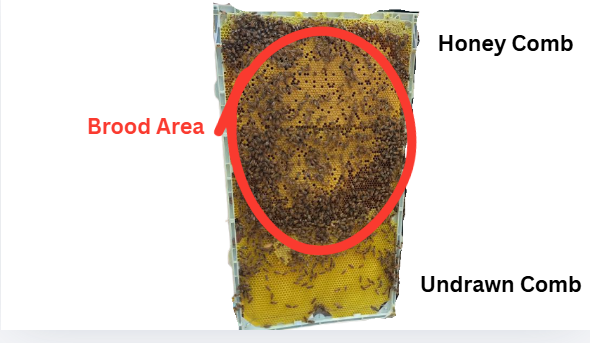
Brood and honey cells differ in depth by roughly 1/8 to 1/2 inch (3 to 13 mm), depending on setup:
- Brood cells sit about 0.5 inch (12.5 mm) deep per side, with the comb tight and flush to the frame, and frames spaced around 1.375 inches (35 mm) center to center.
- Honey cells run deeper, about 0.625 to 1 inch (15 to 25 mm) per side, extending well past the wood into a thick, bulging wall, with spacing widening up to about 1.75 inches (44 mm) center to center.
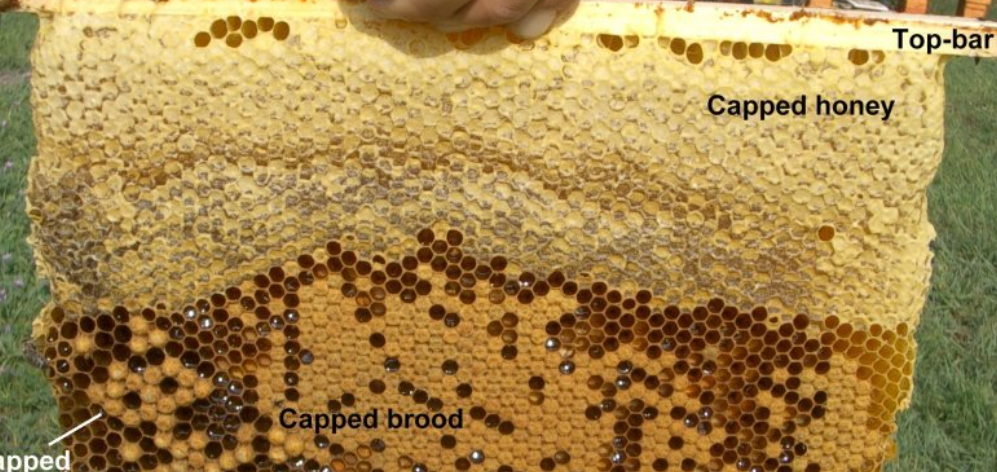
Because cross comb is mostly honey and wax, it can usually be cleaved down the center without reaching brood. Honey is far more likely than brood to be stored in cross comb, and if you do find brood there, it is often drone brood. There is frequently a shoulder of honey sitting above the brood.

Give yourself room to work. On a smaller or just-started colony, temporarily lift out any frames without comb, brood, or bees, including the follower board, so you can slide the combed frames apart from the stuck ones. Separate frames carefully with your hive tool, cutting a seam down the middle of the cross comb where needed. Bees repair trimmed honey stores fast, but keep large honey spills off the brood, since small amounts get cleaned up quickly while big spills can harm brood and adult bees.
The types of comb you will run into
Not all irregular comb is the same, and knowing which kind you are looking at tells you how to handle it.
Cross comb runs diagonally or straight across multiple frames instead of in parallel lines. The problem: you cannot pull a single frame without tearing comb and crushing bees. To fix it, remove the follower board and any undrawn frames for room, then use the hive tool to slide frames gently apart so you can see and manage the comb. Trim cross comb that holds honey or food as needed, and avoid brood built into it. If it contains brood, consider waiting 21 days before removing it so the brood can emerge safely.
Bridge comb (or brace comb) is small wax connections between one frame and the next. The problem: lifting one frame drags up its neighbors in a sticky mess. To fix it, clear room as above, then cleave the bridge in the middle with your hive tool and slide the frames apart to check for more comb below.
Burr comb is stray chunks built in empty spaces, on top of frames, against the walls, or under the lid. The problem: it interferes with closing the hive and gets crushed when you do. Scrape it off frames and interior surfaces with your hive tool, and save it in a bucket to reuse the wax or give back to the bees.
Wonky comb is comb that is wavy, crooked, or distorted within the frame itself. The problem: it is structurally weak and hard to extract honey from. It shows up most on wired wax or foundationless frames and least on well-waxed plastic foundation. Add supportive wiring to foundationless frames, and on wired wax foundation, keep the wire centered and taut without so much tension that it twists the frame.
Ladder comb is comb built vertically between two boxes, connecting the bottom bars of an upper box to the top bars of the one below, so bees can climb between them. The problem: it sticks the boxes and frames together and complicates inspection. To fix it, do not yank the top box straight up. Slide it slightly sideways with your hive tool in the seam to shear the ladder comb cleanly, then scrape it fully off the top and bottom bars, or the bees will rebuild it in the same spot.
Tunnel comb is a raised patch of comb sitting about 3/8 inch above the foundation, connected to it by small wax pillars, with bees tunneling underneath. The problem: once it fills with honey or brood, the whole sheet can twist, sag, or break away when you lift the frame. It also hides the queen, who likes the dark hollow, so you can crush her if you are not careful. To fix it:
- Check for the queen first. Look closely inside the tunnel and on both sides of the loose comb before you do anything.
- Cut it out. Slice the tunneled wax away from the top and side bars with your hive tool or a sharp knife.
- Salvage or discard. If the comb is empty or holds only nectar, scrape it into a wax bucket. If it holds brood, remove the plastic foundation sheet entirely, set the flat piece of cut comb back into the empty frame, and secure it with heavy-duty rubber bands so the bees can reattach it.
- Fix the foundation. Before reinstalling the plastic, rub a block of beeswax hard over the face to lay down a heavy, textured coat, so the bees accept and draw it correctly next time.
FAQ
What causes cross comb? Most often wide frame spacing, under-waxed plastic foundation, or a hive that is not level. All three are set before the bees draw comb, so cross comb usually traces back to setup rather than something the bees did wrong.
How do I fix comb that is already crossed? Give yourself room by removing undrawn frames and the follower board, slide the frames apart, and trim the cross comb where it holds honey or wax, avoiding brood. Then re-space the frames to 1/4 to 3/8 inch and nudge the bottom bars into line.
Will the bees rebuild it if I cut it? They can, especially if the underlying cause is still there. Fix the spacing, wax, or level at the same time you prune, or the bees will draw it crooked again.
There is brood in the cross comb. What should I do? If you can, wait about 21 days so the brood emerges before you remove that comb. If you must cut, work around the brood and cut only through honey and empty wax.


