
Early Spring Management for Primal Bee Hives


Your colony made it through winter. Now comes the transition—and Primal Bee colonies often surprise beekeepers with how quickly they get going. The thermal efficiency that protected them through winter now powers rapid spring buildup.
Here's how to manage that transition without getting in the way.
When to Begin Spring Management
Signs Spring Has Arrived (For Your Bees)
- Consistent nighttime temperatures above 50°F (this matters more than daytime temps)
- First natural pollen sources appearing
- Increased bee activity on warm days
- Regular cleansing flights
Why nighttime temperatures? Because that's when the real test happens. It could be 80°F during the day, but if it drops to 40°F at night, bees will struggle to warm the hive back up after you've opened it. Wait for stable nighttime temps before your first inspection.
The Primal Bee Head Start
Colonies in thermally efficient hives often become active 2-3 weeks earlier than those in traditional wooden equipment. Here's why:
- The hive is already warm — Bees don't have to warm up before sending out foragers. The internal temperature is stable and ready.
- Stronger populations survived winter with more reserves.
- Enhanced brood temperature maintenance allows the queen to start laying earlier, even in cool weather.
This is good news, but it means you need to be ready earlier too.
First Spring Inspection
When to Open the Hive
Choose your day carefully:
- Warm, calm day with nighttime temps staying above 50°F
- Mid-morning to early afternoon
- No wind or overcast/threatening weather (overcast days can affect bee temperament)
- Bees already showing active flight behavior
What to Look For
Colony survival and strength:
- Queen activity (look for eggs or young larvae)
- Population size compared to your fall assessment
- Dead bee accumulation (some is normal; excessive is concerning)
Food stores:
- Remaining honey/syrup stores
- How close stores are to the cluster
- Empty comb available for the queen to lay in
- Pollen stores for feeding brood
Health check:
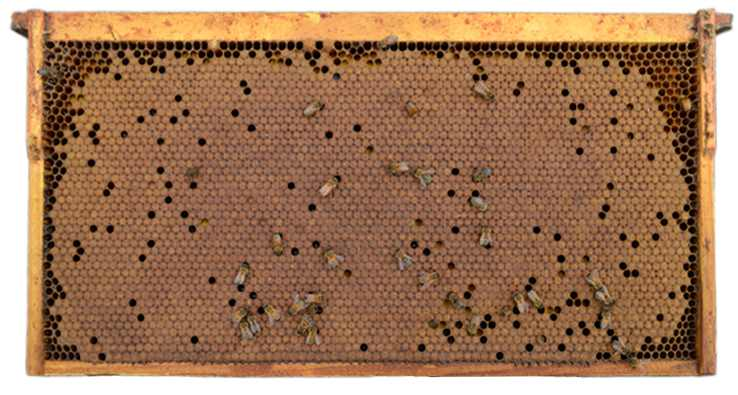
- Brood pattern quality (solid patterns are good; scattered/spotty patterns need attention)
- Any obvious signs of disease or pests
- Queen presence and performance
- Overall colony condition
Don't linger. Get the information you need and close up.
Space Management for Spring Buildup
This is the core spring management task: giving colonies room to grow without giving them so much space they can't maintain temperature.
Strong Colonies (6+ frames with bees)
These colonies are ready to explode. They may:
- Need full 8-frame configuration immediately
- Require early super addition due to rapid buildup
- Show congestion within weeks of first inspection
Watch for swarm preparation. Strong colonies that run out of space will swarm. Look for queen cells—but know the difference:
- Swarm cells appear at the bottom edges of frames. This means the hive is strong, running out of room, and preparing to send half the colony out with a new queen. It's reproductive behavior.
- Emergency queen cells are scattered across the face of the comb, often in the middle of frames. This tells you the colony either lost its queen or has a weak queen they're trying to replace.
- "Dud" cells — Sometimes bees build what looks like queen cells but they're empty or filled with wax. These are essentially practice runs and don't mean anything is wrong.

Primal Bee swarm advantage: A standard Langstroth hive swarms when the colony reaches 5-9 frames of brood. A Primal Bee hive has the nest area equivalent of 3 Langstroth deeps on 8 frames—so you're less likely to see swarm cells because the queen has plenty of room to lay. Only 8 frames need inspection for swarm cells, not 24.
Moderate Colonies (4-5 frames with bees)
These colonies need gradual expansion:
- Add 1-2 frames, remove 1-2 follower boards
- Monitor buildup rate before making further adjustments
- Watch for signs they're ready for more space
Weak Colonies (2-3 frames with bees)
Weak colonies require different management—and sometimes tough decisions:
- Maintain reduced space initially (4 frames + 3-4 follower boards)
- Focus on population building before expansion
- They may need more food — feed more regularly or more heavily until they get going
Options for weak colonies:
- Feed heavily and hope — Sometimes they just need a boost to get started
- Requeen — A weak queen may be the problem; a new queen can turn things around
- Combine with another weak colony — Two weak colonies can make one strong one
Sometimes weak colonies are just duds. Not every colony makes it, and that's part of beekeeping.
Combining Weak Colonies
The traditional method uses newspaper: stack one hive box on top of another with newspaper between them. The bees chew through the paper slowly, getting used to each other's pheromones before they fully mix. This prevents fighting.
For Primal Bee hives: You may be able to use a follower board as the barrier between two colonies when combining. The bees would need to get through or around it, giving them time to acclimate. This approach is still being tested, so proceed carefully if you try it.
After combining, you'll need to address the queen situation—either let them sort it out naturally (they'll keep the stronger queen) or remove one queen before combining.
Progressive Expansion Strategy
The basic cycle of spring management:
- Start with winter configuration (reference page 22 of the Welcome Guide)
- Add frames as the colony grows — replace follower boards with frames one at a time
- Monitor bee acceptance of the additional space
- Add supers when the nest box is nearly full (6-7 frames covered)
- Add more supers as those fill up
- Repeat until you're ready to harvest or the season ends
The pattern is simple: you're adding frames until the box fills up, and then you're adding boxes until all the frames in those boxes fill up.
Early Spring Feeding
When Feeding is Beneficial
For wax production (drawing out new foundation): Use heavy syrup — 4 parts sugar to 1 part water. This encourages bees to build comb quickly.
For stimulative feeding (encouraging brood production): The research here is less definitive. What we do know:
- Light syrup (1:1 sugar to water) is sometimes used to mimic a nectar flow
- Begin when queen starts laying consistently
- Continue until natural nectar flows begin
- Stop if weather turns cold for an extended period
Emergency feeding: If stores are critically low after winter, you may need to feed just to keep the colony alive. Use heavier syrup (2:1 or even the 4:1 ratio) for rapid energy.
Important reminder: Some feed supplements inhibit queen laying. Read labels carefully. If a supplement is designed to discourage brood production (sometimes used for winter brood breaks), don't use it when you're trying to build up a colony.
Feeding Method
Use the feeder hole with an inverted mason jar (page 22 of the Welcome Guide). Avoid:
- Internal frame feeders — increase humidity, bees can drown
- Entrance feeders — attract pests, block access
Don't forget: Remove the circular screen from the feeding hole before placing the jar. That screen is only meant to keep bees out while you're preparing—if it's in place, bees can't access the syrup.
Entrance Management
Gradual Opening
Start with winter-reduced entrances and open up as the colony strengthens:
- Remove entrance reducers completely when the colony covers 6+ frames
- Watch for traffic jams — if bees are backing up trying to get in and out, that's your sign to open up more
- Most beekeepers leave entrance reducers on year-round unless there's visible congestion at the entrance
Protect Against Robbing
During early spring buildup, weak colonies are vulnerable to robbing by stronger colonies. Keep entrances reduced on weaker hives until they can defend themselves.
Growth Monitoring: Milestones, Not Schedules
Don't schedule weekly or biweekly inspections. The goal is less frequent checks overall, with external observation whenever possible.
Instead of a schedule, watch for growth milestones:
- Wax building out — If you installed new bees, first look for them drawing out the foundation
- Queen laying eggs — Second milestone: eggs visible in cells
- Brood development — Watch for larvae, then capped brood (pupae)
- Space filling up — From here, you're just making sure they always have room to grow
External monitoring options:
- Weight — Hives getting heavier means nectar coming in
- Entrance activity — Bees bringing in pollen (visible on their legs) means brood is being fed
- Temperature/humidity sensors — Bluetooth sensors (inexpensive, around $20 for two) can tell you if the brood area is expanding without opening the hive. As the brood area grows, the temperature reading will rise as it gets closer to the sensor.
If you feel you need to check weekly, do it externally. Only go inside if you see something concerning or need to add space.

Early Season Health Management
Queen Assessment
- Verify queen survival and performance
- Look for consistent egg-laying pattern
- Watch for supersedure cells (signs the colony is trying to replace her)
- Address queen issues promptly—spring is the time to requeen if needed
Pest and Disease Monitoring
- Check varroa mite levels using the tray
- Look for signs of nosema or other diseases
- Plan your varroa monitoring and treatment schedule for the season
Note on American Foulbrood: This is a serious, reportable disease that requires specific protocols and deserves dedicated attention. See our Pest Management guide for detailed information. If you suspect AFB, contact your state apiarist or local beekeeping association immediately.
Preparing for Spring Nectar Flows
Super Addition Timing
Primal Bee colonies often need supers earlier than you'd expect—sometimes 2-3 weeks earlier than traditional hives would need them.
Add supers when:
- 6-7 frames are covered with bees in the nest
- You see rapid frame filling
- Nectar is coming in (frames getting heavier, uncapped nectar visible)
Be ready with multiple supers for strong colonies. It's better to have them assembled and waiting than to scramble when a nectar flow hits.
Equipment Preparation
- Assemble supers with frames and foundation ahead of time
- Check that your safety strap can accommodate increased hive height
- Prepare extraction equipment earlier than you would for traditional hives
Regional Spring Adaptations
Northern Climates
- Extended gradual warm-up period—be patient
- Protect from late cold snaps (don't expand too aggressively)
- Conservative expansion timing until weather stabilizes
- Once conditions improve, be ready for rapid buildup
Temperate Climates
- Variable conditions require flexibility
- Monitor weather patterns for management timing
- Balance growth support with protection from late freezes
- Plan for typical spring nectar flows
Southern Climates
- Earlier, more extended active season
- Rapid transition from winter to active management
- Early super addition often required
- Longer spring management period—your "spring" may last months
Common Spring Management Issues
Swarming (Too Rapid Expansion)
- Monitor for queen cells, especially on frame bottoms
- Ensure adequate space—add supers proactively
- Consider early splitting if you want to expand your apiary
- Manage congestion before it becomes a problem
Slow Spring Buildup
- Assess queen performance—is she laying well?
- Check colony health (mites, disease)
- Provide stimulative feeding if appropriate
- Verify optimal space configuration (not too much, not too little)
- Consider requeening if the queen is the problem
Resource Competition / Robbing
- Keep entrances reduced on weak colonies
- Ensure weak colonies have adequate internal stores
- Don't leave syrup or honey exposed near the apiary
- Protect weak colonies until they can defend themselves
Success Indicators
Healthy Spring Development
- Steady population growth (visible increase in bees each time you check)
- Consistent, solid brood pattern expanding
- Good queen performance (lots of eggs)
- Adequate store accumulation from feeding/foraging
- Nectar (uncapped honey) visible when flows start
- Pollen being brought in (visible on bee legs)
Ready for Main Season
- Colony covering 7-8 frames by late spring
- Strong forager population active
- Supers needed for incoming nectar
- Healthy, disease-free colony status
- No signs of swarming preparation (or swarm prevention measures in place)
The Spring Advantage
Primal Bee colonies typically emerge from winter stronger and begin building earlier than traditional hives. This is an advantage—but only if you're ready for it.
The faster your colony grows, the sooner you need to:
- Add space
- Watch for swarm preparation
- Add supers
- Be ready for earlier honey production
The good news: because you're inspecting less frequently and the hive maintains itself better, you're not doing more work—you're just doing it on a different timeline.
Spring is when the season is won or lost. Get it right, and you're set up for strong honey production. Miss the signs, and you'll spend the rest of the year playing catch-up.
Questions about spring management? Primal Bee holds regular office hours—reach out if you're seeing something unexpected or need help reading your colony's signals.
On this Page
- When to Begin Spring Management
- First Spring Inspection
- Space Management for Spring Buildup
- Progressive Expansion Strategy
- Early Spring Feeding
- Entrance Management
- Growth Monitoring: Milestones, Not Schedules
- Early Season Health Management
- Preparing for Spring Nectar Flows
- Regional Spring Adaptations
- Common Spring Management Issues
- Success Indicators
- The Spring Advantage


