
Heat Stress Management for Summer


Here's the thing about heat management in Primal Bee hives: most of it isn't necessary.
The same thermal efficiency that keeps your colony warm in winter keeps them cool in summer. EPS insulation works both directions—it deflects heat just as effectively as it retains it. Field testing in the Israeli desert, Australian outback, and during North American heat waves has consistently shown the same result: Primal Bee colonies don't overheat the way wooden hives do.
That said, extreme heat can still stress any colony. Here's what you actually need to know.
The Primal Bee Heat Advantage
In wooden hives, summer heat creates visible stress. Bees "beard" on the front of the hive—clustering outside the entrance, fanning air in, trying desperately to cool down the interior. It's a sign the colony is spending energy on climate control instead of foraging and building.
Primal Bee hives don't beard. Even during 100°F heat waves, colonies maintain normal behavior while wooden hives nearby show obvious heat stress. The insulation keeps the ideal temperature inside the hive regardless of whether the external challenge is extreme cold or extreme heat.
This doesn't mean you can ignore summer management entirely. But it does mean most traditional heat management advice—designed for wooden hives—doesn't apply to you.
What Normal Summer Behavior Looks Like
Don't worry about:
- Some bees hanging outside the entrance on hot afternoons
- Increased activity at the entrance during peak afternoon hours
- Light fanning sounds from inside the hive
- Bees taking breaks from foraging during the hottest part of day (roughly 2-4 PM)
This is all normal. Bees naturally reduce foraging during extreme heat and resume when conditions improve.
When to Actually Pay Attention
True heat stress signs (rare in Primal Bee hives, but possible during extreme/prolonged heat):
- Large clusters of bees covering the entire front of the hive (bearding)
- Loud, continuous fanning sounds audible from several feet away
- Very little activity even in early morning or late evening
- Bees appearing agitated when you approach
- Bees hanging in thick curtains outside the hive
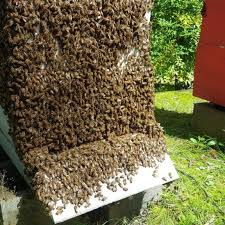
If you're seeing these signs in a Primal Bee hive during a heat wave, the colony may be overcrowded or have another underlying issue. Heat alone rarely causes this in well-insulated hives.
Summer Management: What Actually Matters
1. Water Access
Bees use water to cool their hive—they spread it on surfaces and fan to create evaporative cooling (like a natural air conditioner). This is the one summer need that doesn't change based on hive type.
Provide a water source within reasonable distance of your hives:
- Shallow pan, bird bath, or large plant saucer
- Add rocks, sticks, or floating cork so bees can land safely without drowning
- Refill with fresh water regularly
- Place in shade if possible to keep water cool
Note: Bees can be picky about water sources. They'll fly 3-5 miles to find water they prefer, sometimes ignoring a source you placed right next to the hive. If they're not using your water source, don't worry too much—they've found something they like better.
Alternative approach: You can feed a very light syrup (4 parts water to 1 part sugar) through the feeder hole. This provides both water and a small energy boost.
2. Hive Space
Crowded hives generate more heat from bee activity. During summer buildup, make sure your colony has room to grow:
Signs bees need more space:
- Heavy traffic at the entrance with nowhere for bees to go inside
- Rapid frame filling in the nest
- Bees building comb in unusual places (they're running out of room)
Solution: Add supers proactively. Better to give slightly too much space than too little during active season.
3. Entrance Management
During hot weather, you can open entrances fully to maximize airflow:
- Remove entrance reducer plugs when temperatures consistently exceed 85°F
- Return to reduced entrances when temperatures moderate
- This is less critical in Primal Bee hives than wooden hives, but it doesn't hurt
4. Inspection Timing
Avoid opening the hive during peak heat (noon to 4 PM):
- Disrupts whatever cooling efforts the bees are making
- Metal hive tools get extremely hot and can burn bees
- Best inspection times: early morning (before 10 AM) or evening (after 6 PM)
5. Feeding Adjustments
Avoid feeding sugar syrup when temperatures exceed 90°F:
- Syrup ferments quickly in heat
- Adds humidity inside the hive
- Can attract robber bees
If you must feed during hot weather:
- Feed only in evening after temperatures drop
- Use smaller amounts
- Check daily for fermentation (sour/alcohol smell) and remove if spoiled
- Stop until temperatures moderate
What NOT to Do
Don't add ventilation holes to your hive.
Primal Bee hives are engineered for optimal airflow. The thermal efficiency depends on the sealed design with controlled ventilation through the entrance. Extra holes disrupt this system and can actually make temperature regulation harder, not easier.
Don't pour water on the hive.
This can damage EPS material and creates humidity problems inside. Let bees collect water themselves from nearby sources.
Don't wrap the hive or add insulation in summer.
The EPS is already providing insulation. Adding more material can trap heat and make things worse.
Don't panic about bearding.
If you do see some bearding on extremely hot days, it's not an emergency. Ensure water is available, check that they have adequate space, and let the colony manage. Excessive intervention causes more stress than the heat itself.
Regional Considerations
Desert/Very Hot Climates (Arizona, Israeli desert, Australian outback)
Primal Bee hives have been specifically tested in these environments. The key considerations:
- Water is critical — Multiple sources if possible, as bees will drain them quickly
- Shade can help but isn't as necessary as it would be for wooden hives
- Consider light-colored covers to reflect additional heat
- Morning/evening inspections only
The insulation that seems counterintuitive in a desert actually works in your favor—it deflects external heat rather than absorbing it like wood does.
Humid Hot Climates (Southeast US, Gulf Coast)
Humidity is the bigger challenge here than heat alone:
- Focus on air circulation (hive placement that catches breezes)
- Monitor for excess moisture buildup inside
- May need to tip front of hive slightly forward for drainage
- The EPS won't absorb moisture like wood would, which is an advantage
Temperate Climates with Occasional Heat Waves
Most heat waves are temporary. Key points:
- Open entrances during the heat wave
- Ensure water access
- Return to normal management when heat passes
- Don't overreact to a few hot days
Emergency Heat Wave Protocol
When temperatures exceed 100°F for multiple consecutive days:
Immediate actions:
- Open entrances fully
- Ensure multiple water sources are available and full
- Verify colony has adequate space (add super if crowded)
- Provide shade if hive is in full afternoon sun (temporary—plywood or tarp positioned 12-18" above hive with air gaps on all sides)
If colony is in severe distress (heavy bearding, loud continuous fanning, very little normal activity):
- Wet towels placed on top of the hive cover (not touching bees) can help—change frequently as they dry
- A small fan positioned to blow air across (not directly into) the entrance
- These are temporary measures for extreme situations
When to be concerned:
- Massive bearding continuing even in early morning when it should be cool
- No bee activity during cooler morning/evening hours
- Large numbers of dead bees around the hive
- Strong fermentation smell from inside
Contact experienced beekeepers or your local extension office if you see these signs persisting.
The Bottom Line
Primal Bee hives handle heat dramatically better than wooden equipment. The same thermal efficiency that's marketed for winter survival works equally well in summer—keeping the interior stable regardless of external temperature extremes.
Your main summer jobs are:
- Provide water access — This is universal for all hives
- Manage space — Don't let the colony get crowded during buildup
- Time inspections appropriately — Early morning or evening, not peak heat
- Don't overthink it — The hive's design handles most temperature regulation automatically
Most traditional heat management advice was developed for wooden hives that genuinely struggle with summer temperatures. With Primal Bee equipment, you can largely let the thermal efficiency do its job.
Dealing with an unusual heat situation? Primal Bee holds regular office hours where you can get specific guidance for your circumstances.


