
Heat leaves through the top and bottom
A 1922 USDA study found most heat escaped through the bottom of the hive, and warm air rises to the lid. Wall R-values get the attention, but a cold floor or thin lid can undo good walls.

Six hives compared for long, hard winters: how each one handles heat and moisture, what it really costs, and who it suits. We make one of them, so we've laid out its drawbacks too.

Prices checked November 5, 2026
Every claim sourced
Our stake disclosed
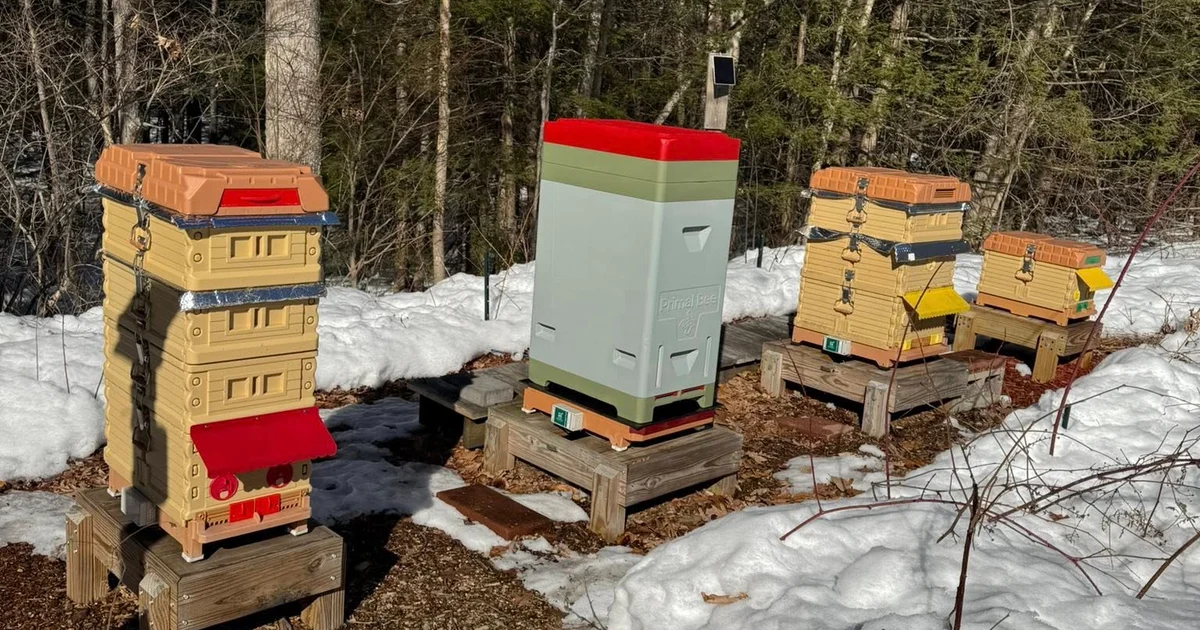
For most beekeepers in cold regions, a hive with insulated walls and an insulated lid beats bare wood, because it holds steadier, drier conditions without a fall wrapping routine. The right one depends on your budget and the gear you already own.
So read this guide knowing we have a stake. No other brand paid to be included, and we didn't run a new side-by-side test for it. Every price comes from the seller's public page, checked November 5, 2026, in US dollars per hive or per listed unit. Prices change, so confirm before you buy.
A hive can't make a weak colony strong. What it can do is cut the heat and moisture a colony fights all winter. Here's what to compare.
A 1922 USDA study found most heat escaped through the bottom of the hive, and warm air rises to the lid. Wall R-values get the attention, but a cold floor or thin lid can undo good walls.
Warm, wet air condenses on a cold lid and drips onto the cluster. Look for a plan to keep the inner surfaces warm or vent the moisture away, whatever the hive is made of.
Insulation slows heat loss. It doesn't replace enough honey, a healthy queen or low mite counts going into fall.
Some insulated hives stack with wood and some don't. Mixing systems can leave gaps or put a cold box on top of a warm one.
Check what the listed price covers. Frames, foundation, paint, a wrap or a second deep can add a lot to the cheapest-looking option.
Prices in US dollars, checked November 5, 2026. Each R-value comes from its maker using a different method, so treat them as a rough guide, not a ranking.
Swipe the table sideways to see every column.
| Hive | Walls | Published insulation | Frames and fit | What the price covers | Price (USD) | Best for |
|---|---|---|---|---|---|---|
| Wooden 10-frame Langstroth with a wrap | 3/4-inch pine | About R-1 to R-1.2 per pine wall (figures cited by Apimaye and USDA-ARS). The Bee Cozy wrap is sold as R8. | Standard 10-frame Langstroth. Every frame, box and accessory fits. | Kit: assembled, 1 deep and 1 medium, 20 frames with foundation, telescoping cover, inner cover, screened bottom. Wrap sold separately. | $226.99 to $236.99 kit (unpainted or painted), plus $43.99 wrap | Lowest cost and full parts compatibility, if you'll insulate each fall |
| BeeMax polystyrene hive | Polystyrene | R-6.5, per Betterbee. | Standard 10-frame frames. Betterbee says BeeMax stacks with its 10-frame wooden boxes and many wooden covers and bottoms. | Single deep body sold unassembled. Full BeeMax hive kits are listed too; check the kit page for exact contents. | $34.89 per unassembled deep. Hive kits listed from $133 unassembled or $153 assembled. | Adding insulated boxes to a wooden apiary a few at a time |
| Lyson RAPID 10-frame | Polystyrene | Deep box R-6.1, low roof R-5.4, high roof R-4.6, per PerfectBee. | Standard 10-frame deep frames. Betterbee notes Lyson boxes work best with Lyson parts because of their latch system. | Plastic screened bottom board with entrance reducer, two deep brood boxes and a low roof. Frames not listed as included. | $143.16 to $177.05, depending on feeder and roof options | A budget all-insulated hive, top included |
| Apimaye Ergo | Polyurethane foam inside a hard HDPE plastic shell | Foam lab-tested at R-6.93 (EN 12667, 2016), per Apimaye. | Standard 10-frame Langstroth frames. Apimaye says wooden boxes can stack on top. | Double Brood Box set: 2 deeps, insulated top cover, top feeders, screened bottom with pollen trap and IPM tray, entrance and mouse guard, queen excluder, division board, latches. Frames not included. | From $395 (Double Brood Box set). Single box set $265. | Windy, exposed sites and anyone who wants no assembly or painting |
| HiveIQ USA Hive Kit | 1.5-inch high-density EPS | Claims 7x the insulation of traditional timber. No R-value published on the pages we checked. | 9 frames per box. HiveIQ says it is not compatible with wooden hives or Flow Hives. | 2 nine-frame deeps, 1 medium, base with vented floor, 3-stage entrance, lid, queen excluder, varroa and winter board. Flat-packed. Frames and foundation not included. | $309.99 on the product page. The kits collection page showed $249.99 (marked down from $261.97) the same day. | Beekeepers starting fresh who like lighter boxes |
| Primal Bee hive (Starter Kit)We make this one | High-density EPS, patented thermodynamic design | R-50+ average across the full thermal envelope, published by Primal Bee. That's a whole-hive calculation, not a wall-material test, so it isn't directly comparable to the figures above. | Supers take standard Medium or Deep Langstroth frames. The brood nest uses its own frames. Wooden supers on top break the thermal system. | Insulated brood nest with 8 brood frames, plus 3 Medium supers or 2 Deep supers. Nest foundations and super frames sold separately. The Complete Kit ($949) includes them. | Long winters where you want less fall prep and steadier brood temperatures |
Every hive gets the same treatment: what it does well in the cold, what to watch for, and who it suits. That includes ours.
Priced with the Mann Lake 10 Frame Complete Hive Kit Combo and Bee Cozy Winter Wrap
You run wooden equipment today, want the lowest cost per hive, and don't mind a fall wrapping routine.
You want insulation built into the box so there's no seasonal wrap to manage.
Price: $226.99 to $236.99 kit (unpainted or painted), plus $43.99 wrap
What it covers: Kit: assembled, 1 deep and 1 medium, 20 frames with foundation, telescoping cover, inner cover, screened bottom. Wrap sold separately.
Sources:Mann Lake hive kitMann Lake Bee Cozy wrapPrimal Bee vs. Langstroth
Sold by Betterbee
You want better walls without giving up your existing frames, covers and bottoms.
You'd rather buy assembled, pre-finished equipment with no painting.
Price: $34.89 per unassembled deep. Hive kits listed from $133 unassembled or $153 assembled.
What it covers: Single deep body sold unassembled. Full BeeMax hive kits are listed too; check the kit page for exact contents.
Sources:Betterbee BeeMax hive kitsBetterbee on mixing hive materials
Sold by PerfectBee
You want an insulated top and walls on a tight budget and are happy to paint.
You plan to mix boxes freely with other brands.
Price: $143.16 to $177.05, depending on feeder and roof options
What it covers: Plastic screened bottom board with entrance reducer, two deep brood boxes and a low roof. Frames not listed as included.
Sources:PerfectBee Lyson RAPID listingBetterbee on mixing hive materials
Sold by Apimaye USA
You want a complete, finished insulated hive that keeps standard frames.
Cost per box matters most, or you want the top and bottom engineered as one thermal system.
Price: From $395 (Double Brood Box set). Single box set $265.
What it covers: Double Brood Box set: 2 deeps, insulated top cover, top feeders, screened bottom with pollen trap and IPM tray, entrance and mouse guard, queen excluder, division board, latches. Frames not included.
Sources:Apimaye FAQApimaye thermal propertiesPrimal Bee vs. Apimaye
Sold by HiveIQ
You're starting fresh and want light, insulated 9-frame boxes.
You need your current 10-frame gear to fit.
Price: $309.99 on the product page. The kits collection page showed $249.99 (marked down from $261.97) the same day.
What it covers: 2 nine-frame deeps, 1 medium, base with vented floor, 3-stage entrance, lid, queen excluder, varroa and winter board. Flat-packed. Frames and foundation not included.
Sources:HiveIQ kit pageHiveIQ kits collectionPrimal Bee vs. HiveIQ
Made by Primal Bee, the publisher of this guide
You're willing to pay more upfront to stop wrapping hives and give the colony a sealed, insulated nest all year.
You need the lowest cost per hive or want every part to swap with standard gear.
Price: $799 $699 per hive (Black Friday Deal: $699 each for 1 or 2 kits through November 30. Regular price $799.)
What it covers: Insulated brood nest with 8 brood frames, plus 3 Medium supers or 2 Deep supers. Nest foundations and super frames sold separately. The Complete Kit ($949) includes them.
Sources:Primal Bee Starter KitHow Primal Bee calculates R-50+Compare insulated hives
Most brands publish the R-value of a wall material: Apimaye's foam, Lyson's box, BeeMax's polystyrene. Primal Bee publishes an average for the whole hive, including the lid, floor and nest design. Apimaye points out that whole-hive averages can count air spaces and look bigger than wall figures. Both approaches measure something real, but they measure different things. Compare how each hive handles the top, bottom and moisture, not just the headline number.
Alburaki and Corona compared 9 polyurethane and 9 wooden two-deep hives in Beltsville, Maryland, from December 2020 to March 2021. The polyurethane hives held steadier temperatures, averaged 10.20°C inside against 9.73°C, and stayed drier at 52% humidity against 62.5%. The study measured hive conditions, not colony survival.
Journal of Apicultural ResearchE. F. Phillips measured heat loss from hive surfaces and found the bottom lost the most. It's an old study, but it's why a solid, insulated floor matters as much as the walls.
Insulating value of bee hives (archive.org)In one controlled winter comparison, a standard hive used 66 lb of stores and a Primal Bee hive used 13 lb. That's a single comparison run by us, not an independent study or a promise for your apiary.
See the comparisonWhichever hive you choose, these steps do more for winter survival than any box.
Read our varroa mite guideUniversity of Minnesota: Beekeeping in Northern Climates
Polystyrene and foam hives insulate several times better than bare pine walls, and a USDA-ARS study found foam hives held steadier, drier conditions in winter. Survival still depends on mites, stores and the queen. Wood with a good wrap and top insulation also overwinters colonies in cold regions every year.
Usually not for the walls. Insulated hives are built to replace the wrap. Top insulation and moisture control still matter, so check whether the hive's lid is insulated. Primal Bee hives insulate the top and bottom as part of the shell.
It depends on the brand. Betterbee says BeeMax stacks with its 10-frame woodenware, and Apimaye says wooden boxes can sit on its hives. HiveIQ says it is not compatible with wooden hives. On a Primal Bee hive, wooden supers break the thermal system, so we recommend insulated supers.
Most brands publish the R-value of the wall material. Primal Bee publishes an average across the whole thermal envelope, including the top, bottom and design of the nest. Apimaye argues that whole-hive averages can count air spaces and mislead. The numbers measure different things, so compare designs, not just figures.
Insulation slows heat moving in either direction, so a well-ventilated insulated hive also stays cooler in strong sun. Provide shade and airflow in hot spells, as you would with any hive.
No hive does. Varroa, too little honey, a failing queen and moisture cause most winter losses. The right hive lowers the energy a colony spends staying warm, which helps when the basics are already in place.
Prices and product details checked November 5, 2026. Primal Bee figures come from our own product pages and testing.